Bike route through the huerta: Alboraya and Port Saplaya
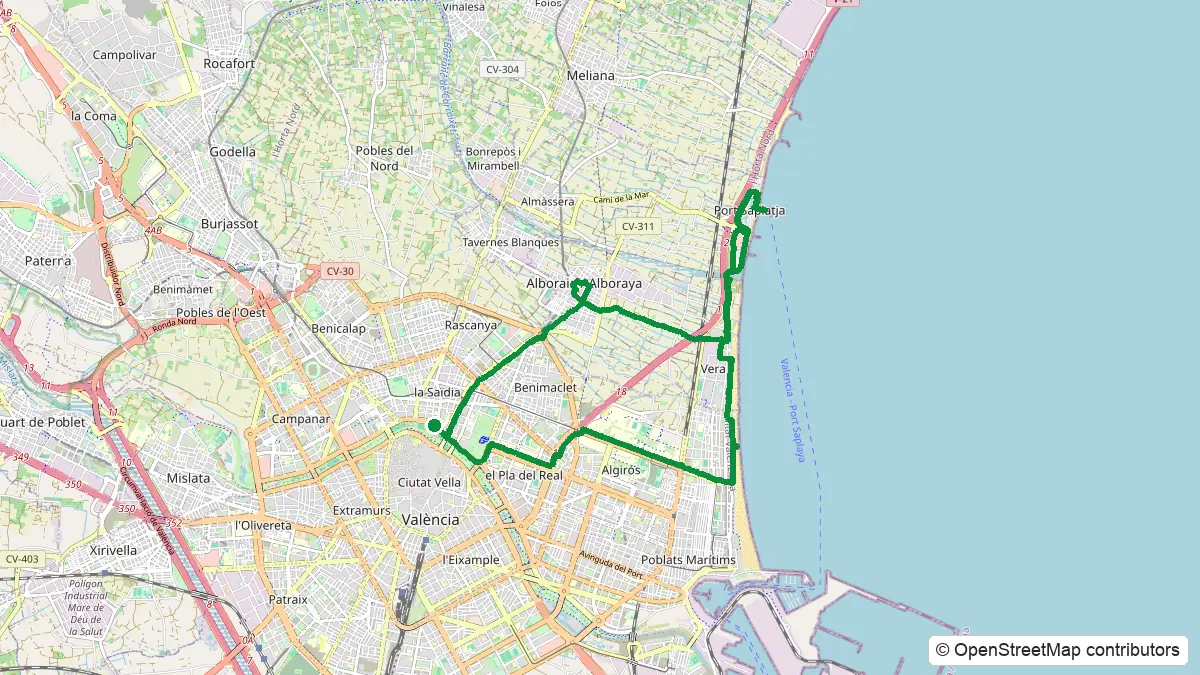
North of Valencia the huerta begins: farmland crossed by irrigation channels and country lanes that run all the way to the sea. This route leaves the shop, crosses Benimaclet to Alboraya —the home of horchata—, rides through the huerta on farm lanes to the coast and comes back along the Patacona and Malvarrosa seafront.
The route
From Guadalaviar 3 it’s a 20.7 km loop, about 108 minutes of riding not counting stops. The first 3.6 km run through city streets to the centre of Alboraya. From there the Camí Fondo and other huerta lanes lead to the coast, next to the Ermita dels Peixets; you ride up to Port Saplaya, the marina with its colourful houses, and come back south along the Patacona seafront to Malvarrosa. The ride back to the shop, about 6 km, runs along avenues with bike lanes.
What to know about the huerta lanes
The huerta lanes are narrow and shared with tractors, locals and other cyclists: ride slowly and give way. The surface is rougher than an urban bike lane and not every stretch is lit, so it’s best to be back in daylight.
Which duration to book
With about 108 minutes of riding, 4 hours is enough for the route with a short stop, as long as pick-up and return fall within opening hours. If you want to stop for horchata in Alboraya, go down to the beach or have lunch in Port Saplaya, book the full day: €12.00 on the city bike and €21.00 on the electric city bike; it’s due back that same evening, before closing: 19:00 Monday–Friday; no full-day rentals on Saturdays.
Which bike to take
It’s a flat route, so the city bike is enough. Over 20 km, the electric city bike takes the effort out of the ride back through the city, and the electric fat bike is the most comfortable on the country lanes. With two small children, the LE20 cargo bike has electric assistance; take care on the narrowest huerta lanes.
Horchata and tiger nuts
Alboraya is the main town for tiger nuts (chufa), the tuber horchata is made from, and the town has traditional horchaterías. Tiger nuts are harvested in autumn and winter; the rest of the year you’ll see other huerta crops from the lanes.
Combining routes
The ride back shares a stretch with the Malvarrosa beach route. Done the other way round —the sea first, then the huerta— the last stretch from Alboraya to the shop is shorter. For a longer ride south there’s the Albufera.
Full rates on the prices page.